Can Nonprofits Add Construction Loan Interest to Solar ITC Basis?
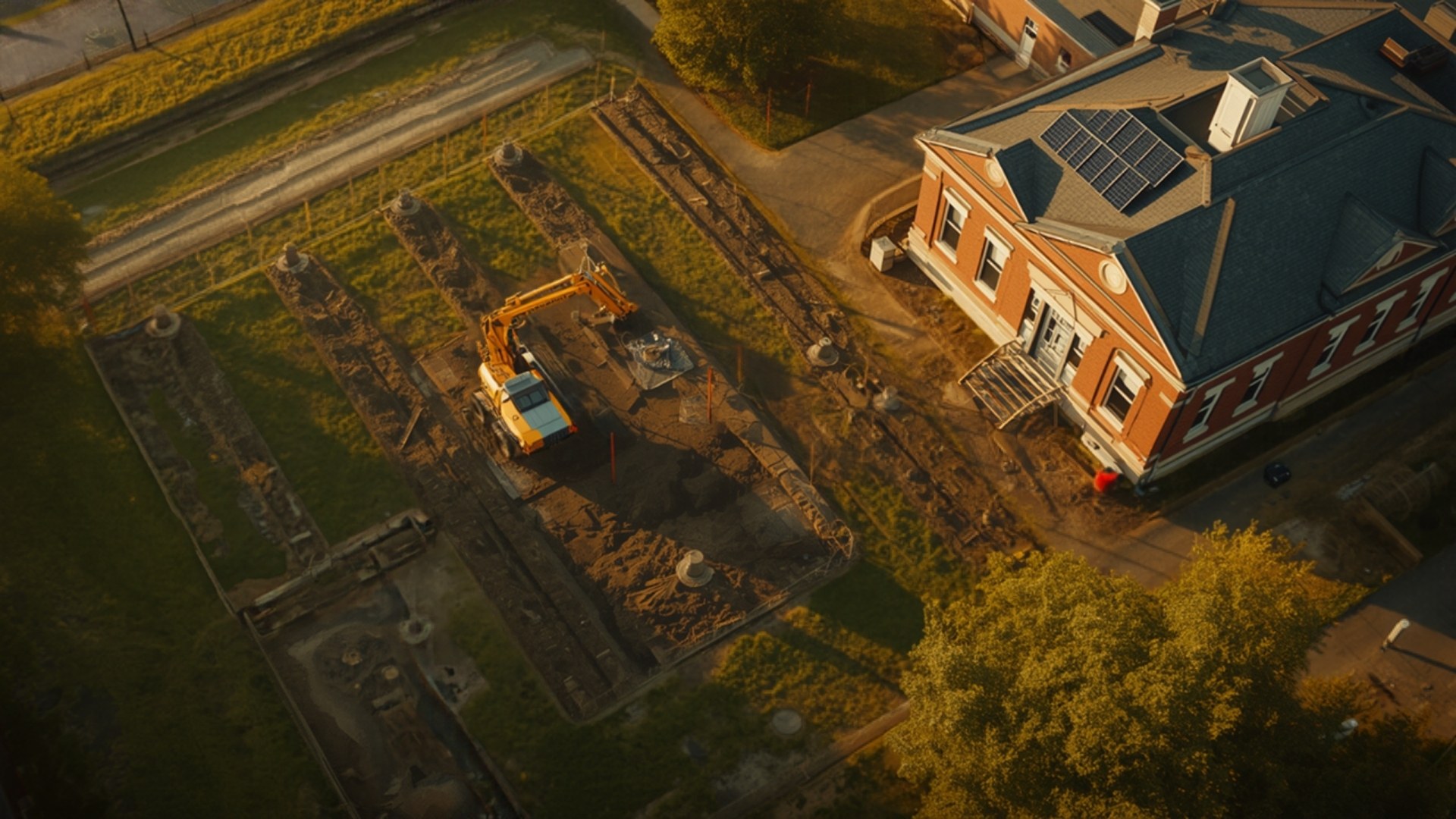
Often, yes. When a nonprofit, school district, city, or church borrows to build a solar array or a geothermal heat pump system and elects direct pay, the interest it pays while the system is under construction can generally be added to the property’s basis, and the credit is figured on that basis. The final elective pay regulations support it in one line that’s easy to read past.
This is current as of November 2026. It applies whether the loan comes from a state green bank, a municipal or utility loan program, a private lender, or a bank construction line. The program doesn’t matter. Who owns the debt, and when the interest accrues, does.
Why can a nonprofit or city use business capitalization rules?
Because the statute says so. When an applicable entity makes the election, Section 6417(d)(2)(B) determines the credit “by treating any property with respect to which such credit is determined as used in a trade or business of the applicable entity.”
The final regulations spell out what that buys. Treas. Reg. §1.6417-2(c)(2)(ii) lets the entity apply “the capitalization and accelerated depreciation rules (such as sections 167, 168, 263, 263A, and 266 of the Code)” in figuring basis.
Section 266 was added on purpose. The proposed rules listed only 167, 168, 263, and 263A. In the preamble to T.D. 9988 (89 FR 17560), Treasury notes that a commenter asked whether applicable entities can use section 266 to capitalize carrying charges, and the final regulations added it in response.
The deemed business rule also closes a gap that would otherwise shut this down. Section 263A normally doesn’t apply to property a taxpayer produces for its own use “other than in a trade or business or an activity conducted for profit.” Elective pay property is treated as business property, so it’s back in.
Section 263A or a section 266 election: which one applies?
Size decides the route.
Section 263A(f) requires interest capitalization for what Treas. Reg. §1.263A-8(b) calls “designated property”: property with a long useful life, an estimated production period over two years, or a production period over one year and a cost over $1,000,000. But section 263A(i) exempts any taxpayer that meets the section 448(c) gross receipts test, which is average annual gross receipts over the prior three tax years of $31 million or less for tax years beginning in 2025 (Rev. Proc. 2024-40) and $32 million or less for 2026 (Rev. Proc. 2025-32).
| Owner | Likely route | What we check first |
|---|---|---|
| Church, museum, small private school | Section 266 election | Gross receipts under the 448(c) test, and whether the build crosses tax years |
| University, hospital system, large nonprofit | Section 263A(f) may apply automatically | Gross receipts, production period, and cost against the designated property tests |
| City, county, school district, housing authority | Either, case by case | How the 448(c) test applies to a governmental unit, which guidance doesn’t address directly |
For most smaller owners, 263A doesn’t force anything, and a section 266 election is how the interest gets into basis.
Which construction loan interest can be added to basis?
Only interest on the owner’s own debt counts, and only the part that accrues during construction and is allocable to the energy property.
- The construction window. Under section 263A, the production period ends “on the date on which the property is ready to be placed in service.” Under §1.266-1, interest on personal property runs to the later of installation or the date the property is first put into use; for any part that is real property, it runs until construction is complete.
- Real borrowing only. The regulation excludes “theoretical interest of a taxpayer using his own funds.” Paying cash out of reserves adds nothing.
- Not the wait for the IRS. Interest on a bridge loan carried after the system is in service, while the organization waits for the elective payment, doesn’t add basis. Neither does a loan drawn only after completion.
- The energy share only. A loan that funds a full renovation is allocated. Only the portion tied to the solar or geothermal property counts, which is the same line drawn in what counts as energy property.
- The owner’s debt. In a power purchase agreement, an energy-as-a-service contract, or a special purpose entity, someone else owns the system and the elective pay rules aren’t the ones that apply. Direct pay and PPAs covers that split.
Tax-exempt bonds are a separate question with their own rule. Under section 48(a)(4) and section 48E(d)(2), which both apply the rule in section 45(b)(3), tax-exempt bond financing reduces the credit by the lesser of 15 percent or a fraction measured against the property’s additions to capital account. For a town using municipal bonds, the credit file has to address the bond reduction and the interest question together.
When does a nonprofit or city have to make the section 266 election?
The election is made by “filing with the original return for the year for which the election is made a statement indicating the item or items” being capitalized. Once made for a project, it holds for the entire construction period, even across several tax years. It runs project by project, so electing on one system doesn’t bind the next.
That creates a timing problem the IRS hasn’t addressed. A church or city usually files Form 990-T only in the year the system is placed in service. If construction starts in one tax year and finishes in the next, the first year’s interest may need an election on a return the organization wouldn’t otherwise file. Settle that before construction starts.
The regulation adds a limit: “An item not otherwise deductible may not be capitalized under section 266.” For a taxable business, interest is a deductible item. For an exempt owner, our reading is that the deemed trade or business rule makes it one, and Treasury’s decision to list section 266 for applicable entities supports that reading. No IRS FAQ or form instruction speaks to it yet, so we document the position in the file rather than assume it.
How much credit does capitalized construction interest add?
Real money, though modest next to the project. Take a $4 million geothermal project with a $3 million construction loan at 6 percent, drawn evenly over a 14-month build. The average balance is about half the loan, so construction-period interest comes to roughly $105,000. At a 30 percent credit rate, which for a geothermal heat pump system generally requires meeting the prevailing wage and apprenticeship rules unless its thermal nameplate capacity is under 1 megawatt, that’s about $31,500 of additional elective payment. The figure scales with the loan balance and the length of the build. A short build on a small array may not justify the work.
Why do advisers miss construction interest on direct pay projects?
Most basis work, including the eligible basis study on a geothermal project, starts from the installer’s pay applications and the final invoice. The loan file sits with the finance office, a different set of documents, and nobody asks for it. Fund accounting often books interest as an operating expense, so it never shows up in the capital project. Many consulting firms and advisers who build these files come from the taxable side, where a solar developer’s financing sits in a separate entity and the question never reaches them. And section 266 made the regulation’s list only because a single comment letter asked, so the answer is one easy-to-miss entry in that list.
That’s why we ask for the loan agreement and the draw schedule at intake, next to the contracts. The interest is already paid. Leaving it out of basis leaves credit on the table.
Building with a construction loan? GreenFile Advisory handles the Section 6417 filing and the basis file behind it. Request a scoping review before construction starts, and we'll tell you which capitalization route fits, whether a construction-year return is needed to make the election, and what loan records to keep.
Have a project and a deadline?
GreenFile Advisory handles the tax side of Section 48 and Section 6417 direct pay: eligibility confirmation, eligible basis studies, IRS pre-filing registration, and the Form 990-T with the elective pay election. We handle tax filing and substantiation, working alongside your installer and financing team.
This article is general information, not tax advice, and it reflects IRS guidance as of November 12, 2026. Deadlines and eligibility depend on your organization's tax year and entity type. Please confirm your own facts with a qualified tax professional before relying on anything here.