Does Our Solar Project Sit in an Energy Community?
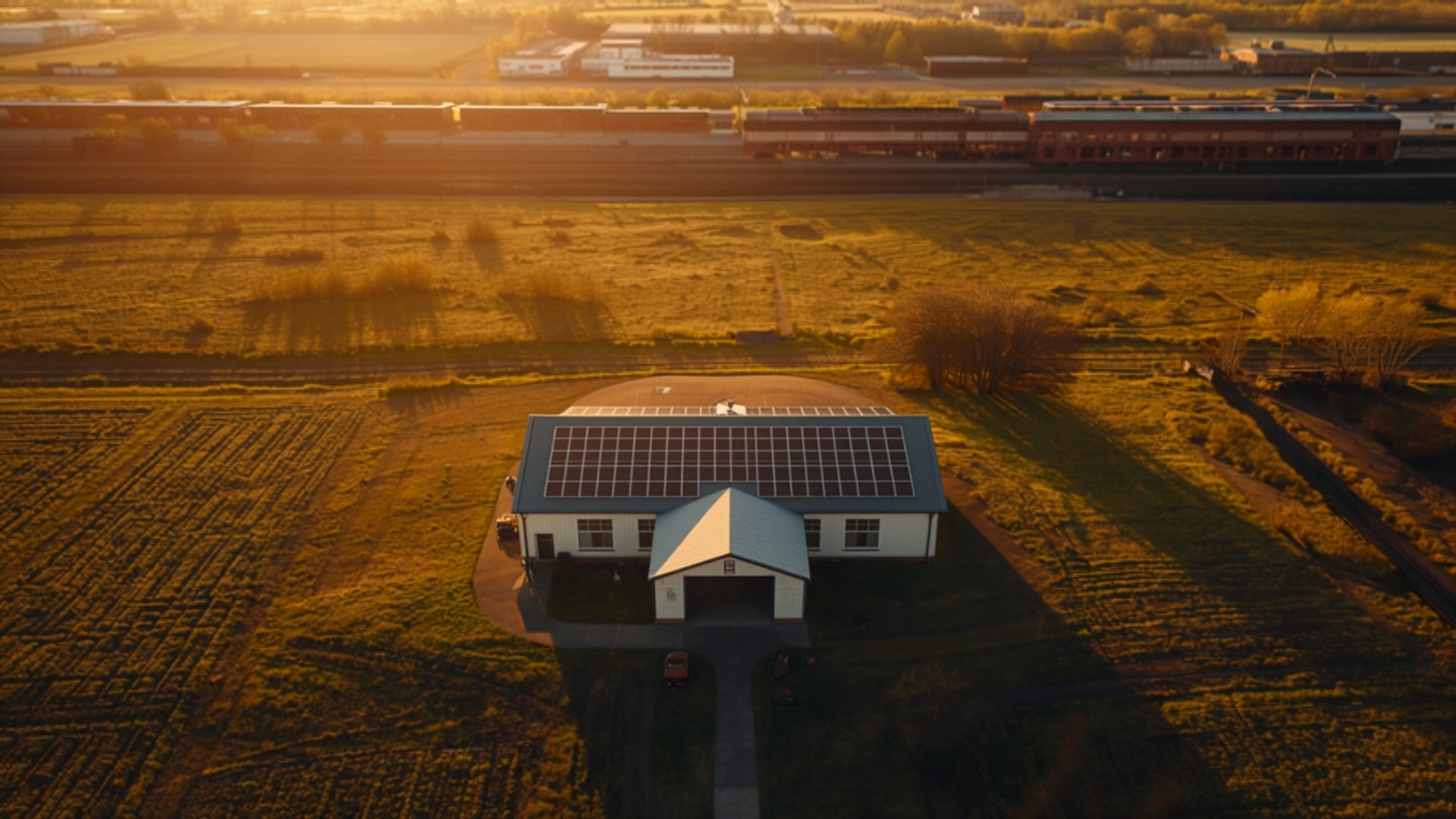
Your project sits in an energy community if it’s on a brownfield site, inside a qualifying coal closure census tract, or inside a metro or non-metro area that meets both a fossil fuel employment test and an unemployment test. The IRS released Notice 2023-29 on April 4, 2023 with the tests and the first county and tract lists. For a school, church, or city that owns its system, the bonus is worth 10 percentage points on top of the 30% rate, so a $1 million project moves from $300,000 to $400,000.
Check the census tract for the exact site, not the mailing address. The county lists turn over every year, so when you check matters as much as what you find.
What the energy community bonus is worth
For the Section 48 investment credit, the bonus adds 2 percentage points to the energy percentage, and 10 percentage points if the project also satisfies prevailing wage and apprenticeship, has maximum net output under 1 MW, or began construction before January 29, 2023. Most nonprofit rooftop projects land under 1 MW, so they get the full 10 points without the wage rules.
Say 10 percentage points, not 10 percent. A 30% credit becomes 40%, not 33%. That single wording slip is the most common way a board deck ends up with a wrong number.
The three ways a site qualifies
Notice 2023-29 sets out three categories, and a project only needs one.
| Category | The test | What to pull |
|---|---|---|
| Brownfield | Real property whose expansion, redevelopment, or reuse may be complicated by the presence or potential presence of a hazardous substance, pollutant, or contaminant | Phase I or Phase II assessment, or a government site record |
| Coal closure | A census tract, or a tract adjoining one, where a coal mine closed after 1999 or a coal-fired generating unit retired after 2009 | The tract number and the IRS appendix listing it |
| Statistical area | A metro or non-metro area with 0.17% or greater direct fossil fuel employment, or 25% or greater local fossil fuel tax revenue, and an unemployment rate at or above the national average for the prior year | The county, both prongs, from the same appendix vintage |
Both prongs have to be met, and the tax revenue prong has never been implemented, so every qualifying area on the published lists qualifies through employment plus unemployment.
When is the location test measured?
For an investment credit project, the site has to be in an energy community on the date the project is placed in service. A safe harbor helps. If construction began on or after January 1, 2023 in a location that was an energy community on the construction start date, the site is treated as an energy community on the placed in service date, even if the county drops off a later list.
That safe harbor is the reason to document your construction start date carefully. County lists turn over every year with new unemployment data. A project that qualifies when the contract is signed can fall outside the list by the time it energizes, and the construction start date is what saves it.
One more mechanical point: the project is in an energy community if 50% or more of its nameplate capacity sits inside the qualifying area. For a project with no nameplate capacity, the same 50% test runs on square footage.
What a nonprofit owner has to keep
There’s no certification statement for this, no attachment, and no required map printout. You answer the energy community question on Form 3468 and enter the bonus percentage, and everything behind that answer stays in your own file. Notice 2023-29 says only that a taxpayer claiming the bonus meets the general recordkeeping rules under Section 6001. That sounds relaxed until an examiner asks you to prove the location of a system three years after it was installed.
A defensible file holds:
- The geocode. The project’s census tract and county numbers, with the source of the geocode.
- The appendix. The specific IRS notice and appendix where that tract or county appears, by name.
- The matching vintage. Proof that both statistical area prongs are met under the same data vintage.
- Nameplate capacity. Capacity by generating unit, with manufacturer data, or a square footage takeoff if you use the footprint test.
- The dates. The placed in service date, plus construction start documentation if you rely on the safe harbor.
- Brownfield support. The Phase I or Phase II report, if that’s your category.
For projects of 5 MW (AC) or less claiming brownfield status, a completed ASTM E1527 Phase I assessment works as a safe harbor on its own. For anything larger, the safe harbor requires an ASTM E1903 Phase II assessment confirming the presence of a hazardous substance, pollutant, or contaminant.
These rules are notices, not regulations
The entire energy community regime runs on IRS notices. Notice 2023-29 promised proposed regulations, and taxpayers may rely on the notice until those arrive. Notices can be modified, and this one already was, three days after it came out, on the construction start rule. If the bonus is in your project budget, check for updates before the return is filed, not just when the project kicks off.
Updated September 2026. The county and tract lists have been updated every year since this was written: Notices 2023-47, 2024-30, 2024-48, 2025-31, and most recently Notice 2026-39 (2026-27 I.R.B. 1, June 29, 2026), which moved the statistical area applicability date to June 10, 2026. The coal closure tract lists are cumulative and have to be read together. The county list is not: each annual appendix replaces the one before it and carries its own applicability date, so a county that qualified in 2024 may not qualify now. Notice 2023-45 also narrowed the brownfield Phase I safe harbor, which now works only if the assessment identifies the presence or potential presence of a hazardous substance, pollutant, or contaminant. A clean Phase I no longer qualifies the site. Notice 2025-31 and Notice 2026-39 also carry correction appendices listing tracts that qualify because of location data fixes, retroactive to tax years starting after December 31, 2022. If your organization was told in 2023 or 2024 that its site missed, that answer is worth re-checking. The proposed regulations promised in 2023 still have not been issued.
How to check your own site
Get the census tract for the exact site, not the mailing address, and match it against the current appendices before the system is placed in service. If the project is close to a line on the map, document the construction start date the same week it happens.
Scoping a project? GreenFile Advisory handles the Section 6417 filing side for tax-exempt owners, including the bonus credit file. Tell us about the project and we'll tell you what the documentation should look like before the system is turned on.
Have a project and a deadline?
GreenFile Advisory handles the filing side of Section 6417 direct pay: eligibility confirmation, IRS pre-filing registration, and the Form 990-T with the elective pay election. Filing and compliance only, so we are not competing with your installer or your financing.
This article is general information, not tax advice, and it reflects IRS guidance as of April 10, 2023. Deadlines and eligibility depend on your organization's tax year and entity type. Please confirm your own facts with a qualified tax professional before relying on anything here.