What the 2025 Tax Law Changed for Nonprofit Solar
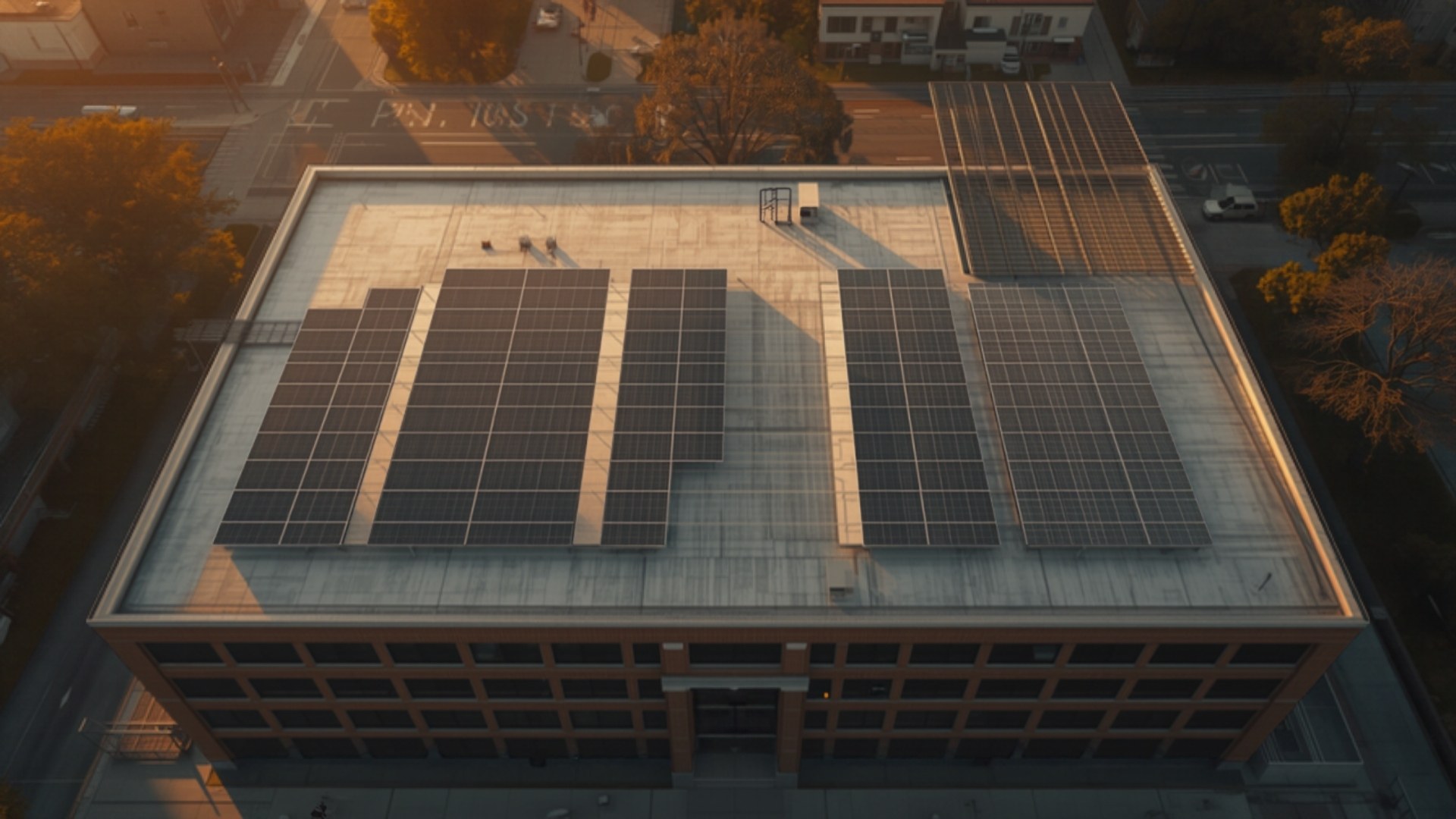
The reconciliation law enacted July 4, 2025, the One Big Beautiful Bill Act (P.L. 119-21), changed the clean energy credits without touching the mechanism tax-exempt owners rely on. Direct pay under Section 6417 is intact. The law added no new phase-out of elective pay, the list of applicable entities is unchanged, and the registration and filing architecture is the same. The domestic content phase-down that has applied to elective pay since 2022 is still there, and it’s covered below.
What changed is the credit sitting underneath it, and the changes run on construction start dates rather than placed in service dates. For an organization planning a project, the construction start date now drives everything else.
What the July 4, 2026 construction start date decides
Section 48E now terminates for wind and solar property placed in service after December 31, 2027, and that termination applies to facilities whose construction begins more than 12 months after enactment, which is after July 4, 2026.
The two dates work together, and the order gets reversed constantly:
| If construction begins | Then |
|---|---|
| On or before July 4, 2026 | The 2027 deadline doesn’t apply to your project at all |
| After July 4, 2026 | The system has to be placed in service by December 31, 2027 |
The credit doesn’t end on July 4, 2026. That date decides whether a hard placed in service deadline attaches to your project.
Energy storage is carved out of this termination entirely, including storage placed in service at a wind or solar facility. A campus adding batteries is not on this clock.
Geothermal heat pumps came through untouched
Ground-source heat pump property stays under Section 48, so long as construction begins before January 1, 2035. The 6% tier, which reaches 30% with prevailing wage and apprenticeship compliance, holds for construction beginning before January 1, 2033. It steps down to 5.2% for 2033 starts and 4.4% for 2034 starts, or 26% and 22% with prevailing wage and apprenticeship. The new law didn’t amend any of that.
For a school, church, hospital, or municipal building on a long planning horizon, geothermal heat pump property now has the longest runway of anything on this list, and it’s the only one with no 2027 backstop.
Section 48 is effectively closed to new solar
The law reduced the residual Section 48 energy percentage for certain property to zero and blocked bonus increases from applying to it, for construction beginning on or after June 16, 2025. Combined with the earlier rule ending the 6% tier for solar whose construction begins after 2024, new solar belongs under Section 48E.
Domestic content thresholds went up
The adjusted percentage for Section 48E moved on a schedule keyed to when construction begins:
Before June 16, 202540 percent
The original threshold.
June 16 to December 31, 202545 percent
The first step up.
Calendar year 202650 percent
Where a project starting this year lands.
After December 31, 202655 percent
Where it settles.
These key to beginning of construction, not to the placed in service date, and the trigger is on or after June 16, 2025, not after. A project starting exactly on June 16, 2025 is at 45%.
For an applicable entity with a project of 1 MW (AC) or more, domestic content isn’t only a bonus question. The elective payment itself is reduced for projects that size that don’t meet the requirement, and for construction beginning after December 31, 2025 that reduction takes the payment to zero. A project with maximum net output under 1 MW (AC) is exempt from that rule entirely. So is a project covered by a statutory exception, which Treasury must provide where using domestic steel, iron or manufactured products would raise overall construction cost by more than 25%, or where the relevant products aren’t produced in the United States in sufficient and reasonably available quantities or of satisfactory quality. Where an exception applies, the payment goes back to 100%.
New foreign sourcing rules, and a new penalty that lands on you
For facilities and storage whose construction begins after December 31, 2025, the credit is denied if the project includes material assistance from a prohibited foreign entity, measured by a cost ratio test with thresholds that rise each year. There are also entity-level rules that deny the credit to certain foreign-influenced owners.
The change tax-exempt owners should note is procedural. The law extended the excessive payment rules to one specific foreign entity disallowance, for tax years beginning after July 4, 2025. New Section 6417(d)(6)(D) reaches a disallowance described in Section 6662(m)(2), which is the disallowance of a Section 45X, 45Y or 48E credit by reason of overstating the material assistance cost ratio. It doesn’t reach a disallowance based on the entity-level rules. An excessive payment carries the amount back plus 20%, and it’s imposed whether or not the entity is otherwise subject to income tax. An organization with no tax liability has nothing to absorb it with, which makes supplier documentation a financial control rather than a paperwork exercise.
The questions that decide where your project stands
Three questions decide where a project stands.
Did construction begin by July 4, 2026? If yes, the 2027 placed in service backstop doesn’t apply and the project has its ordinary runway. Document the start date contemporaneously, with the test you relied on.
Is the project 1 MW (AC) or larger? If yes, domestic content moves from an upside question to a payment question, and it’s decided at procurement.
Did construction begin after December 31, 2025? If yes, the foreign entity rules apply and the answers have to come from your supply chain in writing.
Updated September 2026. Two developments since this was written. The IRS issued Notice 2025-42 on August 15, 2025, narrowing how wind and solar projects beginning construction after September 2, 2025 establish that construction began. On June 6, 2026 the United States District Court for the District of Columbia held that notice arbitrary and capricious under the Administrative Procedure Act, vacated it in full and remanded it to the IRS, in Oregon Environmental Council v. IRS, No. 25-4400 (D.D.C. June 6, 2026). The court found the IRS gave no reasoned explanation for the change and never weighed the reliance interests built up around the older guidance. Vacating the notice puts back the older tests, including the five percent safe harbor. The ruling could still be challenged, so check its status before relying on it. Separately, Notice 2026-15 provides interim guidance and safe harbors for the material assistance cost ratio. One point the court ruling doesn't change: Section 7701(a)(51)(J) fixes beginning of construction for the foreign entity rules to Notices 2013-29 and 2018-59 as in effect on January 1, 2025, and Notice 2026-15 confirms Notice 2025-42 never reached that determination. A project can have two different construction start analyses running at once.
What to do next
Pull the construction start documentation for any project already underway and confirm which side of July 4, 2026 it lands on. For projects still in planning, size the system in AC and decide the domestic content question before equipment is ordered.
Working out where a project stands? GreenFile Advisory handles Section 6417 filing and the documentation behind it for tax-exempt owners. Tell us the construction start date and system size and we'll work through which rules bind first.
Have a project and a deadline?
GreenFile Advisory handles the filing side of Section 6417 direct pay: eligibility confirmation, IRS pre-filing registration, and the Form 990-T with the elective pay election. Filing and compliance only, so we are not competing with your installer or your financing.
This article is general information, not tax advice, and it reflects IRS guidance as of July 10, 2025. Deadlines and eligibility depend on your organization's tax year and entity type. Please confirm your own facts with a qualified tax professional before relying on anything here.